The mind in meditation
The reason people don't meditate is the very reason to meditate and it's all in our mind.
CL Zúñiga
8/22/20263 min read

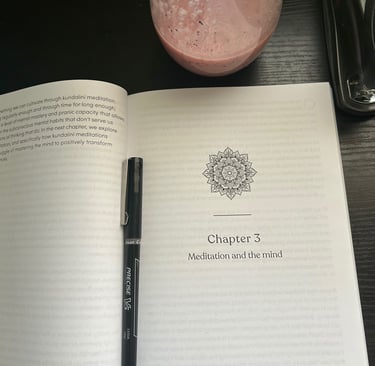
Over the years I've met many people who tell me they don't meditate because when they try, they can't quiet their mind. It's funny to me because that's the very reason I recommend for people to meditate. A busy mind can mean different things for different people, but mostly it means our nervous system is being overrun by endless thought streams, many of which are useless, distracting, and emotionally disruptive, leaving us feeling scattered.
That's because our thoughts and our energy are deeply interconnected. Scattered thoughts lead to scattered energy. Scattered energy feeds things like distraction, lack of focus, confusion, disorientation, imbalance, emotional instability and exhaustion.
But before we dive down that rabbit hole, the first thing to know is that the brain and the mind are not the same thing. The brain is an organ that manages our nervous system and most of our bodily functions. The mind is a psychological secretary that gathers, interprets, sorts, stores and accesses information for us, basically a complex filing system that feeds data back to our brain which then uses it to manage our functioning. The brain has physical substance and weight. The mind does not; it's purely psychological or conceptual.
Does that mean the mind has no weight?
It's true that you can't take a slice out of the mind, place it on a scale and get a physical weight for it like you can the brain. But that doesn't mean the mind doesn't bear weight. It means that the weight of the mind must be measured differently, in terms of psychological thought instead of physical matter. And while thoughts don't carry a physical weight, they do bear weight on the mental, emotional, spiritual and energetic aspects of who we are. They impact our mood, sense of wellbeing, choices and behaviors.
This is important since the mind—our psychological secretary—and our brain are directly linked and collaborate via our central nervous system. The secretary gathers and feeds data to our brain 24/7 which feeds that data to our central nervous system which feeds into everything we think, feel and do, plus how our body runs.
When we hand our secretary the reins over that whole communication system, we are no longer running our lives. Our secretary is, and while that secretary may seem efficient, much of what it runs is outdated, irrelevant, incorrect, inaccurate and ineffective, all too easily leading us to outcomes we don't like or want.
The mind never stops working. It takes its job very seriously, as it should. However, our psychological secretary was never meant to be our boss or run our show. It was meant to be our employee, offering data and solving problems when called upon by us...at our discretion, not its. But the opposite is true for most of us. That secretary's thought stream never stops yammering at us and is our boss.
That's why so many of us feel wired, distracted, overwhelmed, stressed out, exhausted or say we have AD/HD and can't focus. Who can focus with all those useless thoughts in the way? With frazzled or frantic emotions? With static that prevents deep spiritual connection? Or with sludge where energy flow is needed?
It's true. We can't quiet our mind and we'll never learn how to because it's not possible to. But we can learn to tame that secretary.
The point of meditating is not to quiet the mind. It's to master the mind, to become the boss of that secretary. And that is totally possible to do.
Kundalini meditative kriyas, in particular, are designed to support that level of transformation. They help us put our secretary in its rightful place as our employee, allowing us to reclaim the reins of our lives—our personal power. The hub of that power naturally resides in our heart center, not our mind. Ideally, from there we manage our lives with the tools available to our secretary.
It's a lovely day when we can live lightly and call upon our mind for help as needed instead of feeling smothered under a barrage of endless thoughts that don't serve us. When we can notice the beauty that's present around us instead of feeling stifled by an inner heaviness. When we live with a sense of goodness instead of overwhelming stress, frustration or disappointment. When we see ourselves in the other with compassion instead of pointing fingers, judging or punishing. When we cultivate peace, harmony and happiness instead of competition.
If you want to know more about such things, pick up a copy of my latest book, Kundalini Meditation, where I thoroughly unpack this and more.